Posts

A Colonial WikiLeaks? The Migrated Archives and the Caribbean Pt.2
Image
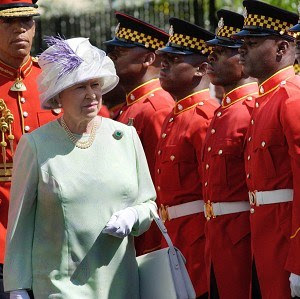
Originally posted April 19, 2012 NACLA.org As reported last week, April 18th marked the public release of the first batch of the secret colonial documents known as the "migrated archives." Only one day removed from the release, British media has been taken with the story, with headlines like Sins of Colonialists Lay Concealed for Decades in Secret Archive, Crimes of Empire Revealed, Colonial Papers and the Ugly Legacy of Empire, Britain Planned Posion Gas Tests in Botswana, and Colonial Office Files Detail 'Eliminations' to Choke Malayan Insurgency reveals the depth of the archives opening salvo. In part two, Robert Hill, Professor of Afro-American and Caribbean History at UCLA, who has been deeply involved in the "migrated archives" since their discovery, shares his insights into the release of the archives and what it entails for the Caribbean history. Professor Hill is editor of The Marcus Garvey and Universal Negro Improvement Association Papers Pr...
A Colonial WikiLeaks? The Migrated Archives and the Caribbean Pt.1

Image
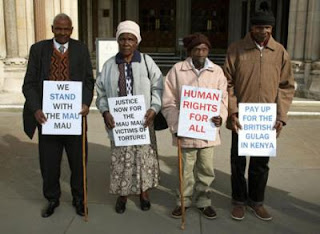
Originally posted April 12, 2012 NACLA.org On April 18, England’s Foreign and Commonwealth Office (FCO) will begin releasing the first group of sensitive documents related to the decolonization of 37 former British colonies. The release of the documents was the result of a High Court hearing in London during April 2011, which centered on four elderly Kenyans, who were labelled as suspected Mau Mau rebels by the British government, and thus experienced abuse, torture, and illegal imprisonment during the Emergency period of the 1950s. Nearly 50 years after the widespread repression and eventual process of decolonization, the case brought forth by the four Kenyan pensioners against the British government has the real potential to be regarded as a “Colonial WikiLeaks,” and quite possibly lead to the rewriting of the established narratives of decolonization and independence not only in Africa, but also throughout the Caribbean and all former Commonwealth colonies. The four claimants, Paulo ...

The People vs. The Pirates: Controversy Abounds in Haitian Reconstruction Investigations

Image
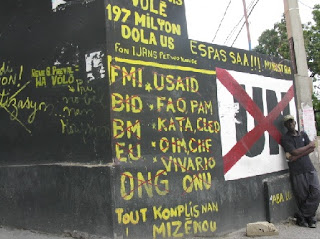
Originally posted on NACLA.org April 5th, 2012 With the release of two separate investigations this week, it is becoming increasingly clear why the reconstruction has failed the Haitian people on such a massive scale—it is lucrative business opportunity first, with the humanitarian priorities coming in at a distant second. On March 30, the Washington-based Center for Economic and Policy Research’s (CEPR) Haiti Relief and Reconstruction Watch (HHRW) released the results of a scathing investigation, which revealed that out of the nearly $400 million spent by USAID in Haiti, only 0.02% of the procurement contracts went to local firms. On the opposite side of the procurement spectrum, U.S. firms concentrated in the Washington DC, Virginia, and Maryland area were rewarded with a staggering 77.46% of the contracts. The largest of the procurements, a $173 million contract to the U.S.-based Chemonics International, was given to the company’s Haiti Recovery Initiation. One of the primary aims o...

Guyana: Remembering Dr. Cheddi Jagan

Image
March 6 marked the 15th anniversary of the death of Dr. Cheddi Jagan, the former President of Guyana and the hemisphere’s first democratically elected Marxist leader. While that distinction is often mistakenly associated with the election of Chilean President Salvador Allende, Guyana was not only the site of this historic election, but Jagan (not Jacobo Arbenz) was also the first leader in the Americas to fall victim to Cold War military intervention—as Iran’s Mosaddegh was overthrown several months earlier on August 19, 1953. In the wake of widespread labour unrest throughout the Caribbean between 1935-38, the West India Royal Commission was established in order to investigate the socio-economic conditions of the British colonial territories in the Caribbean, and propose reforms to minimize the potential of future unrest. In a response to the Commission’s findings, during 1950-51, the British government agreed to the implementation of political reforms that would allow for universal s...

If at First You Don’t Succeed… The United States Renews its Pursuit of Aristide

Image
Originally posted on NACLA.org March 22, 2012 The year 2012 began with a degree of promise and optimism that Jean Claude Duvalier would finally stand trial for his role in committing crimes against humanity and for embezzling hundreds of millions of dollars from Haiti’s treasury. Such a trial would be the most significant human rights proceeding in Haitian history. It has the potential to end a long era of impunity, improve the performance of Haiti’s judiciary, and deliver justice to the hundreds of thousands who were victims of the former "President-for-life." Nearly four months later, the pursuit of Duvalier for human rights abuses has stalled and the media spotlight has shifted, notwithstanding piles of documentary evidence, direct testimony of victims, and forensic financial audits submitted to the Haitian courts. Haiti has an obligation under numerous international treaties it has signed to try Duvalier for crimes against humanity. But in late January, Judge Carves Jean ...

Canadian Banks and Economic Control in the Caribbean

Image
Originally posted on NACLA.org March 15th, 2012 In December 2011, it was reported that the Royal Bank of Canada and the Bank of Nova Scotia were both exploring a return to Cuba under the financial reforms of Raul Castro, more than 50 years after they had been expelled by his brother Fidel. Canadian banks operating in the Caribbean are nothing new, however, the Royal Bank of Canada proudly claims that it had branches in the Caribbean before it had opened any in Western Canada. Canada’s role in the Caribbean is much longer and deeper than most think. The Royal Bank of Canada’s involvement with the Caribbean began in 1864, when a group from Halifax engaged in trade, bringing flour, cod and timber south, returning north with a cargo of sugar, rum and spices. The Bank of Nova Scotia would quickly follow and go on to build a branch in Jamaica in 1889. Such events were a precursor to larger scale Canadian visions of Caribbean control. At the end of World War I, Ottawa had asked the Imperial W...

Hypocritical Justice: Police Killings Rattle Jamaica

Image
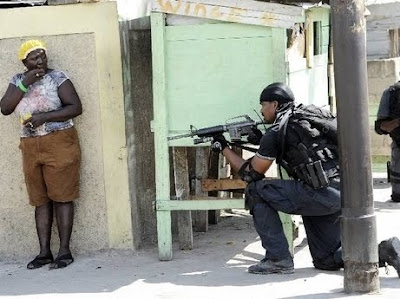
The killing of 21 people— including a 13-year-old girl and an elderly man—by the Jamaican police in the past six days has highlighted the systemic problem the country is having with controlling the inappropriate use of deadly force. To say that the country is outraged by the actions of the police would be an understatement. To say that the people were shocked would be a lie, as events like this have become all too common in Jamaica. So far in 2012, 45 people have been killed by the Jamaican police. What makes matters worse is that when one looks at the record of the police being held accountable for their actions, it is safe to say that those responsible for the extrajudicial killings and other human rights abuses will nearly always go unpunished. For example, out of more than 2,220 fatal shootings by police recorded between 2000 and 2010, only two officers have been convicted. During the state of emergency in May 2010, 76 people were killed over two days by Jamaican security forces in...